
Not all spray tans are created equal, and choosing the right shade is about far more than simply going darker. Your natural skin tone, undertones, and how your skin develops DHA all determine whether your tan looks effortlessly bronzed or obviously artificial. With countless formulas and shade options available, it can be difficult to know which one will deliver the most natural result. This guide breaks down how to choose the ideal spray tan shade for your skin so you can achieve a smooth, believable glow that enhances not masks your complexion.
No matter how many photos and spray tan color charts you look at, you still may have questions about choosing the best shade for your body.
Thankfully, we’ve put together this quick and easy quiz to help you identify a few of the key factors that go into picking the right spray tan color, like what your skin tone is and where you want it to be.
Between this quiz and your amazing spray tan artist, you’ll be covered in more ways than one!
What Goes into Determining Your Final Glow?
Of course, your skin tone is a major factor in determining the result of your spray tan. But did you know there are a few other things that can affect your final color?
Your final skin tone is also decided by the chemical makeup of the tanning solution, the depth of your natural skin color, which spray tan shade you choose, and how your spray tan artist applies the product.
This is one of many reasons to be extra choosy when it comes to who is applying your spray tan and what products they’re using. You deserve only the best when it comes to getting that effortless glow and we know that no one wants that dreaded orange tan.
After working with thousands of clients, we’ve found that most color issues aren’t from choosing the wrong shade they come from using the wrong undertone or leaving the solution on too long.
How to Use a Spray Tan Color Chart
Have you ever stared at spray tan color charts and felt completely confused? We promise you’re not alone. We’re here to help. With a little understanding of what goes into a color chart, you’ll be able to identify your skin tones and other factors to pick the best color. Let’s start with a quick lesson on skin tones and skin undertones.
What’s the Difference Between Skin Tone and Undertone?
While their names sound very similar, your skin’s tones and undertones are two different things. Skin tone refers to the surface layer of color developed by the melanin present in your skin. Skin undertones are those colors beneath the surface layer of skin.
Skin tone typically refers to one of the following general categories:
• Very light
• Light
• Medium
• Dark
• Very dark
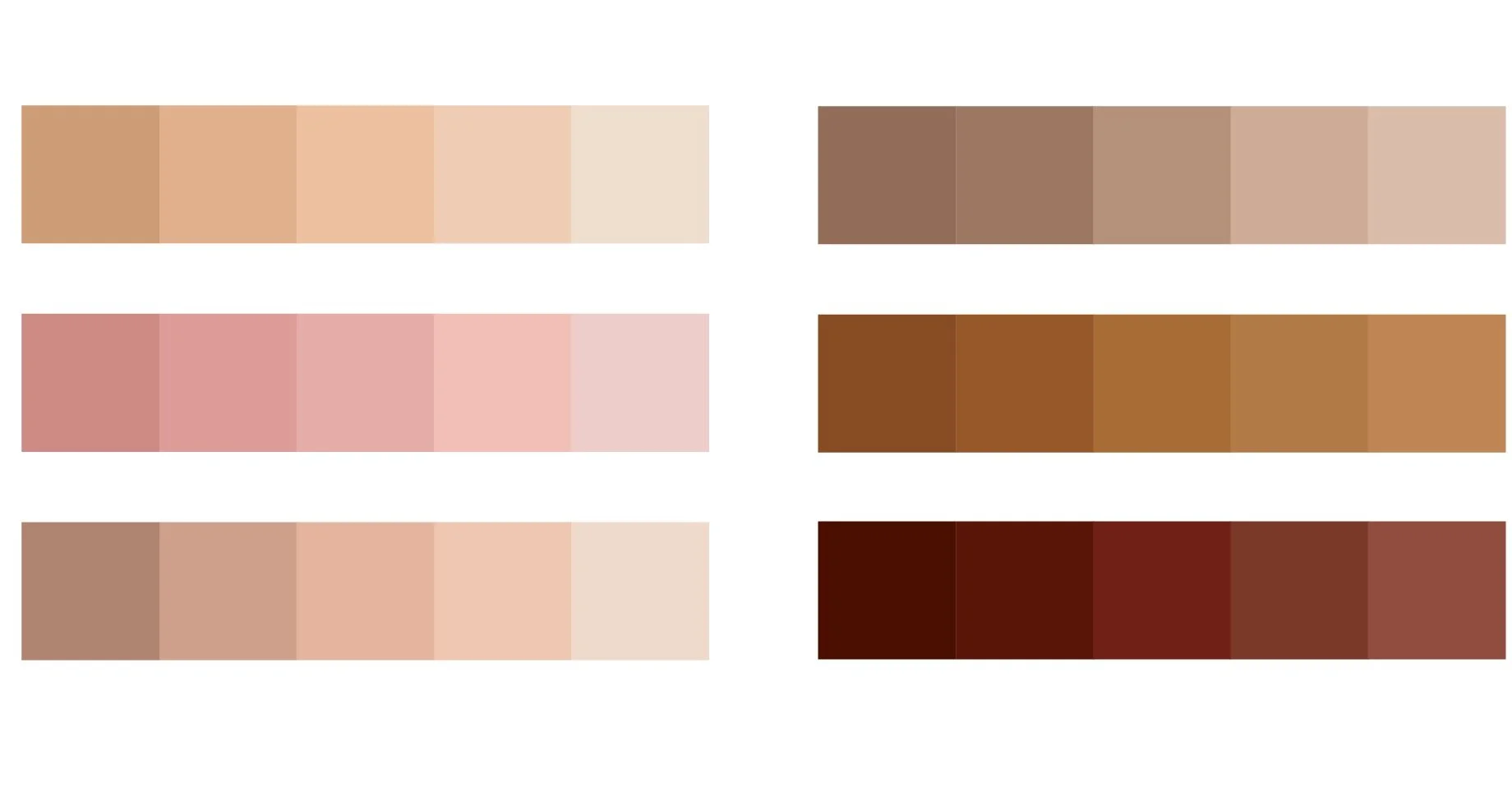
Basically, what you see is what you get with skin tone. If you have a lighter complexion, red hair or light hair, and are prone to sunburn, you probably have a very light to light skin tone. In contrast, if you have a darker complexion, thick, dark hair, and rarely burn, you likely have a dark skin tone.
It’s important to know what your natural skin tone is when you look at a spray tan shade chart because it will give you a baseline for where you’d like to end up after your spray tan.
Skin undertones fall into three categories:
• Cool: pink, red, or bluish undertone
• Warm: yellow or gold undertone
• Neutral: a combination of warm and cool

Just because you have dark skin does not mean you have warm undertones and vice versa. Undertones are definitely a bit trickier to identify but can play a big role in choosing everything from the best makeup shades to the right spray tan color. Here are a few ways to check your skin undertones:
1) Vein color: This is probably one of the simplest ways to check undertones. Look at your wrist and see what color your veins are: blue or green? If they’re green, you’re a warm undertone. If they’re bluish-purple, you’re a cool undertone. If they’re blue-green, you’re a neutral undertone.
2) Put on a white t-shirt: Find a pure white and an off-white piece of fabric or shirt and hold it near your face without makeup on. Which looks better? If it’s the pure white, then you have warmer undertones. If it’s the off-white, you have cooler undertones. And if you can rock both, you’re neutral.
3) Accessorize: Trying on gold and silver jewelry is another quick way to determine undertones. If you love wearing gold, you may be a warm undertone. If you love silver, you may be cool. Of course, if you love both on your skin, you may be neutral.
Knowing your undertones can help you pick a spray tan shade that works well with the product you use. Spray tan colors are designed to work with skin undertones, containing different additives that enhance your skin. Be sure to talk to your artist for any spray tan tips about the different products to better understand how they’ll work with your skin tones and undertones.
After working with thousands of clients over 14+ years, we’ve found that most color issues aren’t from choosing the wrong shade they come from incorrect undertone selection or leaving the solution on too long.
Consider the Seasons
As you consider different tan colors, one thing to remember is the season. Depending on the season, you’ll be wearing various types and colors of clothing, and the light will change, meaning that your spray tan color may appear differently.
For example, in summer, many people choose brighter colors like orange, yellow, and pink. If you plan to sport your summer brights, consider a nice medium to dark tone that will give you a summer glow.

In winter, there is less light, and people tend to wear darker, richer colors like greens, reds, and black. A soft golden tone may be the perfect spray tan shade during the cooler months.
Check the DHA Percentage
When reading some spray tan charts, you may see the percentage of DHA (or dihydroxyacetone) in each shade. Why? Because DHA is the active ingredient in spray tan products and the higher the percentage, the deeper the spray tan color.
For example, if you see it list DHA at 6%, you know that the spray tan color will be light. Colors with upwards of 15% DHA will be much darker. If the spray tan color chart you have doesn’t list DHA, you can always chat with your artist to discuss the ingredients in the products.
Why the Solution Matters Just as Much as the Shade
Even the perfect shade selection can fall short if the solution itself isn’t high quality. Many spray tan formulas vary widely in DHA quality, undertones, and added ingredients, which is why results can differ so much from one salon to another. Be Bronze Professional Solutions were created to eliminate that guesswork, delivering consistent, true-to-skin color with premium ingredients that support smooth application, natural development, and an even fade.
Conclusion
Of course, in addition to taking this quiz, it’s always a good idea to chat with your spray tan artist to glean some wisdom from their expertise. They can offer valuable suggestions from their experience working with different skin tones and products.
Love the quiz? Share this blog with your best babes on Facebook and Instagram!